
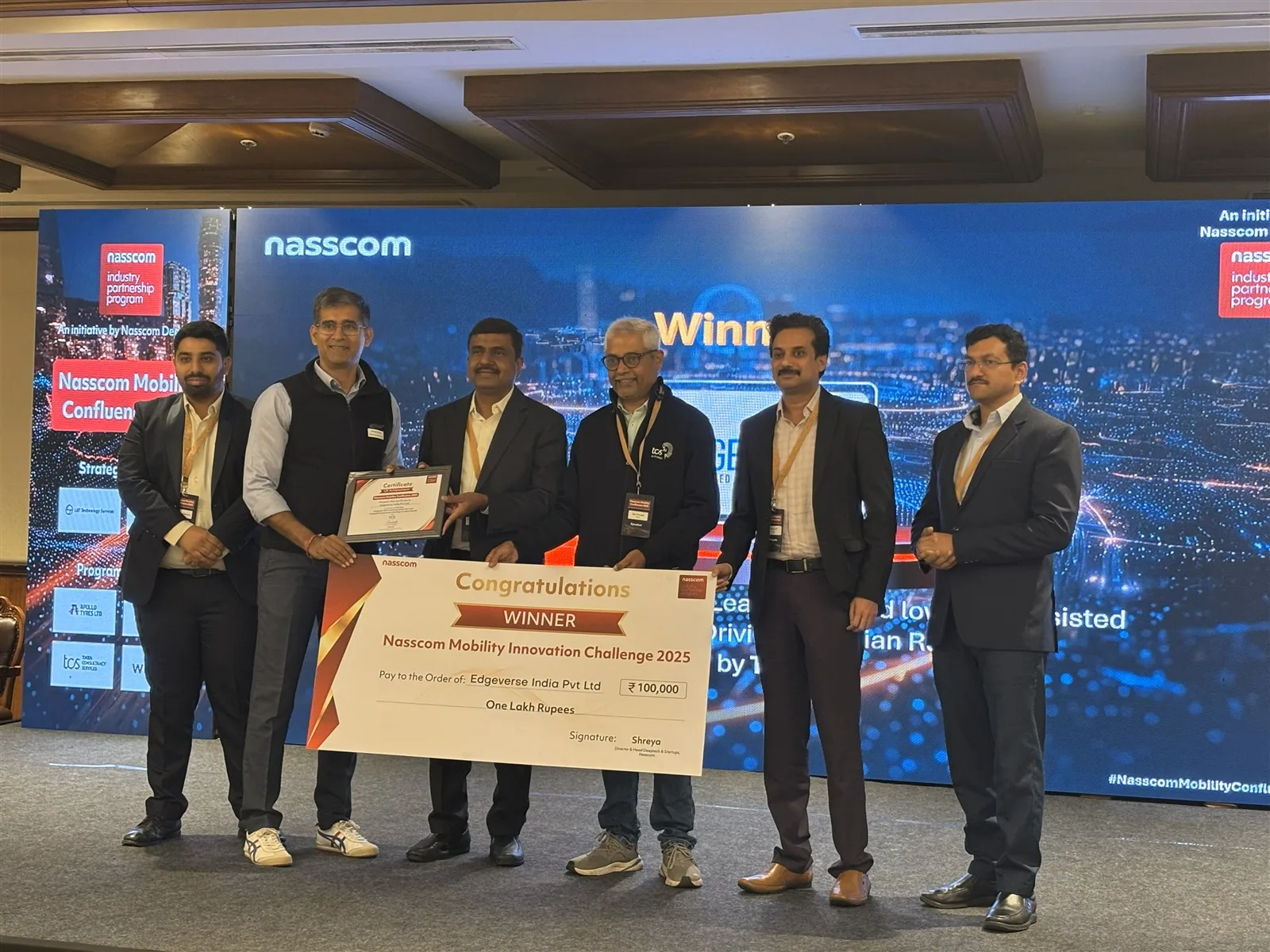
“Our vision is to make life-saving edge intelligence accessible and build technology in India that can compete globally,” says Arindam Ghosh, Edgeverse’s co-founder and CEO.
The company started with one objective: making two-wheelers safer through real-time sensing and intelligent alerts. The scale of that task is large. India has an estimated 375 to 400 million two-wheelers on the road, and domestic sales reached a record 21.7 million in FY2025-26, according to SIAM figures cited by the company.
Three careers, one problem.
The founders came to the problem from different directions. Arindam spent more than 23 years in semiconductor sales and customer acquisition, including leading accounts at Synopsys across India and Asia. Subrata Debnath spent more than 23 years in system design, board support packages and firmware for telecom and defence, at HP and Emulex. Navaneeth A spent more than 12 years building AI stacks for facial recognition and digital twins at Fujitsu.
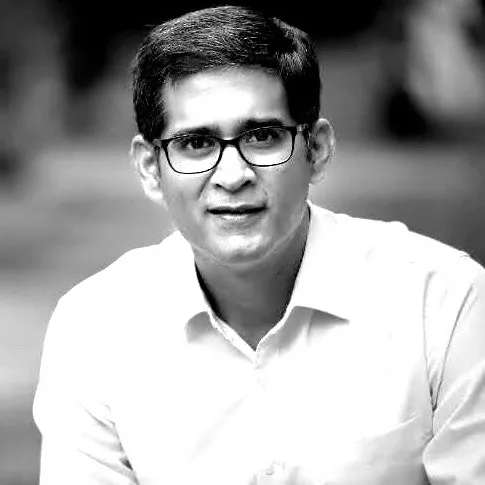
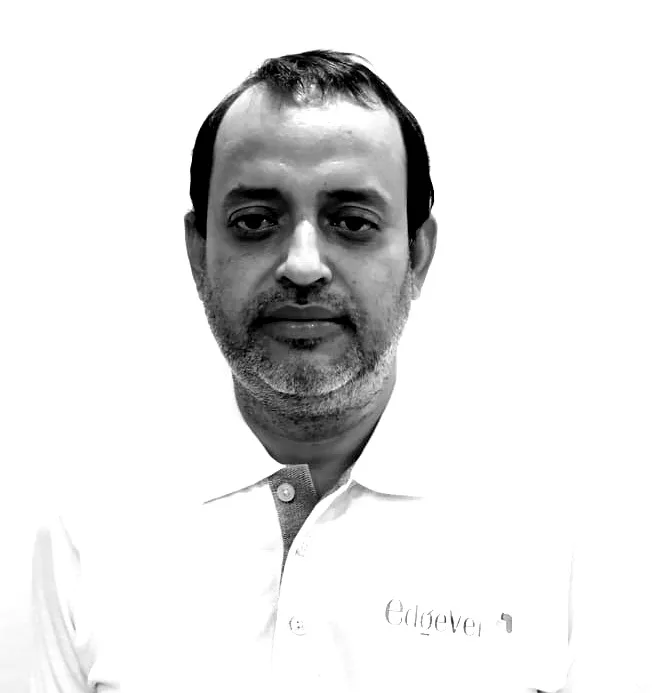

Their own board, their own camera.
The team built its own hardware. Imedge is Edgeverse’s processor board and camera module. On top of it runs Perceiva, a perception stack for camera and radar that predicts collisions, detects vehicles in a rider’s blind spot and gives lane advisories. The company says its alerts arrive in under one second.
Perceiva is hardware-agnostic, so it is not tied to Edgeverse’s own board. The company also offers Perceiva DMS, a camera-based driver monitoring system for commercial vehicles.
An Advanced Rider Assistance System for two-wheelers: predictive collision alerts, blind spot detection and lane advisory.
A camera-based driver monitoring system for commercial vehicles.
Edgeverse’s own processor board and camera module.
A perception stack for radar, alongside the camera.
The company’s advisers include Prof. Venkatesh Babu, Chair of the Department of Computational and Data Sciences at IISc.
Tested on Bengaluru’s roads.
Edgeverse’s first India Perception Model was trained in 2024, the year its Imedge prototype was completed. In 2025 the team took the system onto Bengaluru’s roads for its first on-road testing, including front- and rear-collision detection, and began conversations with vehicle makers.
From demonstration to production.
ARTPARK backed Edgeverse with seed funding of ₹1.85 crore. In August 2026, the Ahmedabad venture capital firm GVFL invested ₹3 crore. By then the team had demonstrated its technology to Ather, was engaging with Cavli and Qualcomm, and was in advanced talks with large global Tier-I suppliers.
“With GVFL’s support, we are looking to accelerate product development and move towards wider commercial deployment”
The plan for the next six to twelve months is concrete: an Indian road dataset covering 100,000 km, a 2MP camera and a 77 GHz radar module, and commercial agreements for both its rider and driver systems.
- Edgeverse, About (founders, timeline). edgeverse.ai
- Edgeverse (products, investors, Nasscom award). edgeverse.ai
- IndianWeb2, “GVFL invests ₹30M in Edgeverse” (28 August 2026). indianweb2.com
- StartupTalky, “Edgeverse raises ₹3 crore from GVFL” (27 August 2026). startuptalky.com
- Venture Intelligence, Edgeverse raises ₹3 crore from GVFL. news.ventureintelligence.com
- ARTPARK, startup portfolio. artpark.in